

Generative AI (genAI) such as ChatGPT and DALL-E have a high potential to disrupt how humans generate ideas, produce art and music, and engage in the writing process. How genAI will impact our creative skill development will depend on whether we use it with the aim to create or simply to produce for others’ consumption. Creativity itself may be at stake due to the availability of this type of AI technology, and how creativity is impacted may depend on how people perceive the AI and use it. A crucial response to this potential involves analyzing the psychology and philosophy behind perceptions of generative AI as a tool, an extension of one’s own mind, or a separate agent. Each of these potential perceptions have implications for how the AI is used, which can determine how creativity itself might be augmented, decayed, or even socially devalued over time. Whether people use genAI with the intention to be creative versus the intention to avoid having to be creative may determine the future of creativity itself.
Generative AI is an innovation that promises to impact the creative sector unlike any past advancements. Over the centuries, artists and other creators such as musicians, writers, and painters have adapted in response to new tools and technologies that have augmented the creative process. In the wake of many of these tools, creators have oftentimes needed to learn the skills to use the tools to avoid being outpaced by other artists, since these tools improved art and streamlined the creation process. Advancements such as music software, document and typing programs, and high quality synthetic materials changed which skills were necessary at baseline to create a work of art. For some advancements, skills like craftsmanship and the ability to acquire raw materials for the sake of creation were outsourced to other industries, which allowed artists to shift more of their focus to the creative process itself. For example, for print artists, rather than hunting and gathering the materials to make their own paint and canvas, they can now purchase pre-made materials online, saving time that can now be spent on ideation and production of the piece.

We have witnessed a historical progression of baseline skill requirements in many creative sectors in response to advancements in tools. For example, writing stories had humble beginnings in which the term “writing” did not yet apply – stories, at first, were told and retold by one’s voice, shared across cultures and down generations by verbal communication. Then, people developed the tools to carve symbols, pictures, and letters, and the actual “writing” of stories began. The skill of recalling and sharing stories was no longer as critical as before. Instead, the skill of using a handheld tool and drawing or carving the storylines adequately or in a pleasing way became the necessary one. Fast-forward centuries later, when typewriters and then Microsoft Word and other programs with spellcheck appeared; at this point, the old skill of distributing a story through word of mouth was much lower on the list of priorities. Instead, being able to think of good story ideas and typing skills were highly-sought. Those who focused on honing ideation skills outpaced those that simply continued to focus on being able to write legibly and spell accurately. Now, with ChatGPT, idea generation may begin to look much different than when we experienced prior advances in tech and tools in the 20th century. Is genAI like ChatGPT and DALL-E simply another advancement in creative tools, through which we will see a similar change in skill priority? From my perspective, the answer to this question is, not quite.
It appears we may have reached the point at which are we no longer simply adjusting skill sets in response to tool advancements. Perhaps we have already reached the self-actualization pinnacle of the hierarchy of the creative process, such that creativity itself is at the top. Supposedly, if someone were to have the tools at their disposal so that the only skill they had to focus on was creativity itself, we have reached the pinnacle of tool use. Any further advancements would then only keep us at the plateau of usefulness; that, or would regress away from having creativity on the top.
Generative AI may very well be the tool that takes us down below the diminishing returns line – now, instead of keeping creativity on its pedestal, we are kicking it off and valuing prompt writing instead. This is an extreme view of how genAI may impact creators and artists, but it’s one we must acknowledge as possible.
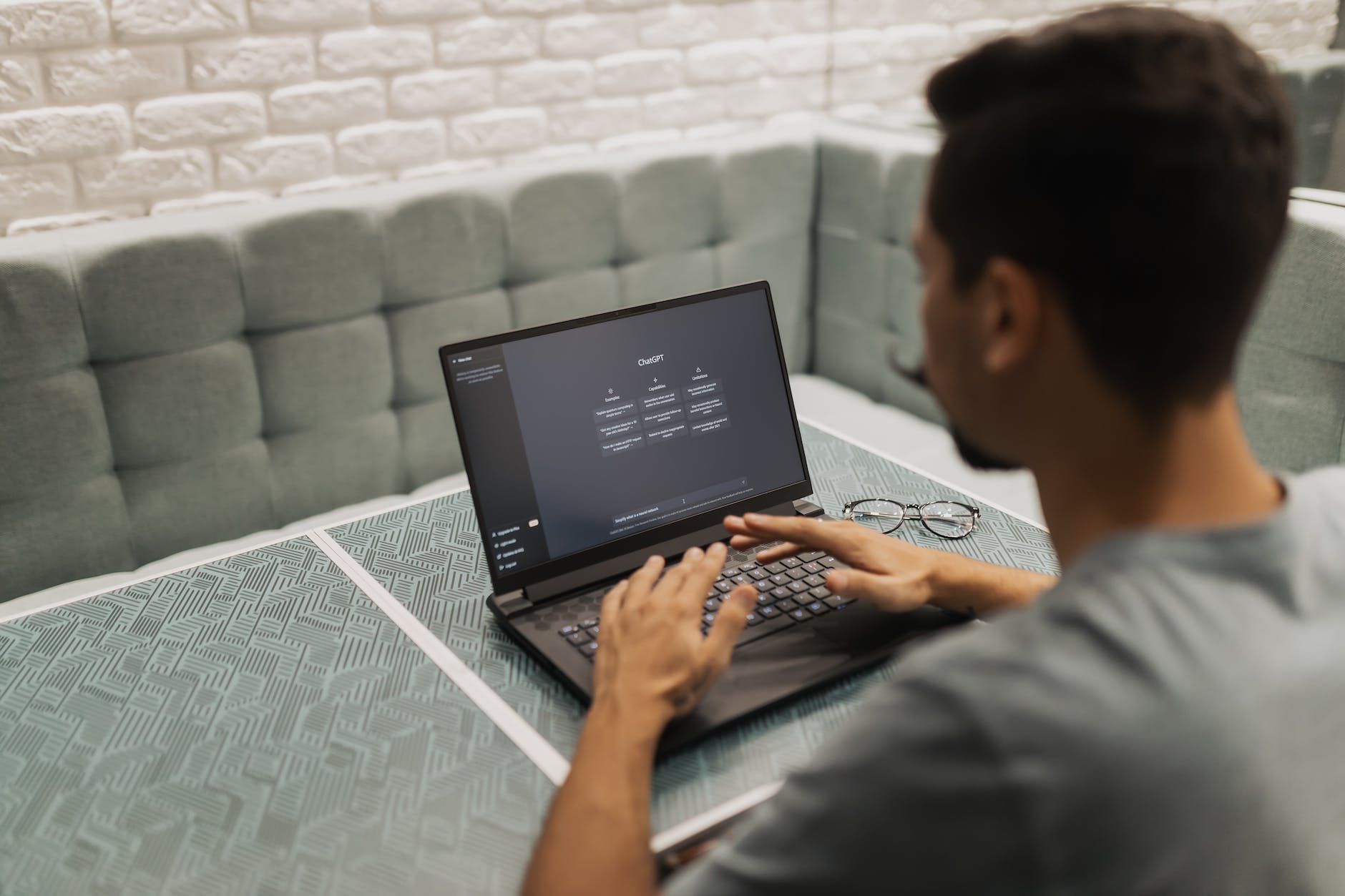
In this short essay on the matter, I will attempt to outline the potential impacts of generative AI on creativity itself with a focus on artists and other creators. I am not the first to attempt to address this problem, and I certainly won’t be the last. Generative AI can either augment, diminish, or have no change on creativity. In my view, whether and how generative AI will devalue creativity and decay creative skills depends on how people perceive and use this new technology. Specifically, I will break perspectives down into the following three categories: viewing genAI as a tool, an extension of one’s own mind, and as a separate agent. The difference between viewing genAI as a tool versus a separate agent is that a tool comes to life via human use and is otherwise not useful, whereas an agent can act on its own accord and create without a human controlling it. My explanation of these three perspectives and uses will be rather cursory, because a more robust explanation would require a much longer piece.
In viewing genAI as a tool, an artist perceives the technology as something to equip in order to augment the creative process. If an artist is having difficulty coming up with ideas or needs to visualize what they want to create, they may use genAI to inspire the outline of their next creation. Let’s say that I want to start a new painting. I have somewhat of an idea of what I want to produce, but when I sketch out the design with pen and paper, something seems to be missing. So, I turn to my more advanced tool, DALL-E, and input the prompt for the design. DALL-E outputs a couple of images, which also don’t quite do it. I change the prompt or adapt the initial images, and from that exercise, I arrive at a point of inspiration: looking at these images, despite them being not quite what I’m looking for, has turned the pegs of my mind and I now have a clearer vision for my end product. This process is much like the inspiration process by which creatives think of new projects: by finding inspiration from the environment, sketching, looking at other art, and more.
In this case, genAI is part of the creation process, but I view it as an aid, not a supplier. GenAI is part of my creation process, but my ideas and creativity come first. Using genAI in this way appears to augment the creative process without outsourcing the creative aspect of my work to AI.
The second way an artist may perceive and use genAI is as an extension of their own mind. The consequences of this perspective stem from the Google effect, in which a person does not memorize or retain information that they think that they can just look up on Google later. In this sense, a person offloads part of their mind and memory to Google – part of their brain that would otherwise be within them is “stored” in the tool. How does this look with respect to genAI? Let’s say I am a blog writer. I just started or have some experience under my belt, and I’m a busy person but want to create short essays about my research ideas. Since ChatGPT is readily available, my process looks like this: if I can’t come up with ideas, I ask ChatGPT to come up with them for me. I pick out some of the ideas I think are good, and ask ChatGPT to write me an outline. I peruse the outline, adapt it, and then ask GPT to write an article. GPT quickly gives me what I consider to be a great base, and from there, I add my own thoughts, revise the wording, change something here and there, and finalize the piece. This use of genAI is a co-creative process with more equal distribution than with genAI as just a tool; at the end of the day, I know what will grab the audience and what a good blog post needs, plus I add in some of my own content. As I go about my day-to-day and as deadlines approach, I’m not too concerned about being able to produce quality content, nor am I thinking too hard about what to write. I know that I have an online brain stored in ChatGPT that can help me do these things when I need it. My writing skill exists, in part, in a creativity search engine with rich output. (Disclaimer: I have not used ChatGPT for this blog post – or others.)

The third way of perceiving and using genAI is as a separate, autonomous agent. A person may view genAI as a creator itself, one that produces creative output for them. Let’s say that I am a musician who decides that it’s time to create a new album. Time and money are tight, or I’d rather spend my time and money on something else, and honestly, AI does a good job. So, I rely fully on genAI as my assistive agent to produce the songs for my album. What the genAI agent produces is satisfactory and within hours I have a full album of music, produced entirely by the genAI agent and untouched and unedited by me. I view genAI as a sort of employee that produces what I ask it to, and my only role is one of a manager.
As artists, creators, and others play around with genAI and develop the skills to equip it, it’s likely that each person will view and use genAI in each of these three ways at some point. The question is, as time goes on, will a particular use gain traction and occur more often, and what might be the lasting consequences on creativity?
You will likely by now have some thoughts on how each of the perspectives and uses outlined in this essay might impact the creative process and one’s own ability to create. If we outsource creativity too much, might that diminish our ability to come up with creative ideas that are not AI-derivative, especially over time? If we assume that one of our values is to cultivate creativity in ourselves, then how we perceive and use generative AI in the creative process is something we must evaluate critically.
…
There’s a great preprint [1] about the concerns of and responses to skill decay relative to creativity that you can access here. The authors’ concern is how we can foster and sustain human skills and agency in the face of advancing AI technologies. The integration of efforts between humans and AI may lead to human skill decay over time as AI takes over the ideation process, raising legal and practical concerns about the originality and legality of AI-generated content. The authors propose the idea of ensembling, which retains diversity of ideas and data and can help mitigate skill decay.
[1] He, V., Shrestha, Y., Puranam, P., & Miron-Spektor, E. (2023). Searching Together: A Theory of Human-AI Co-Creativity.

 Guingrich, r. e.
Leave a comment