2025

Op-ed on the national security threats of anthropomorphized AI companions

Information Professionals Association

Nov 2025

Interview on companion chatbots

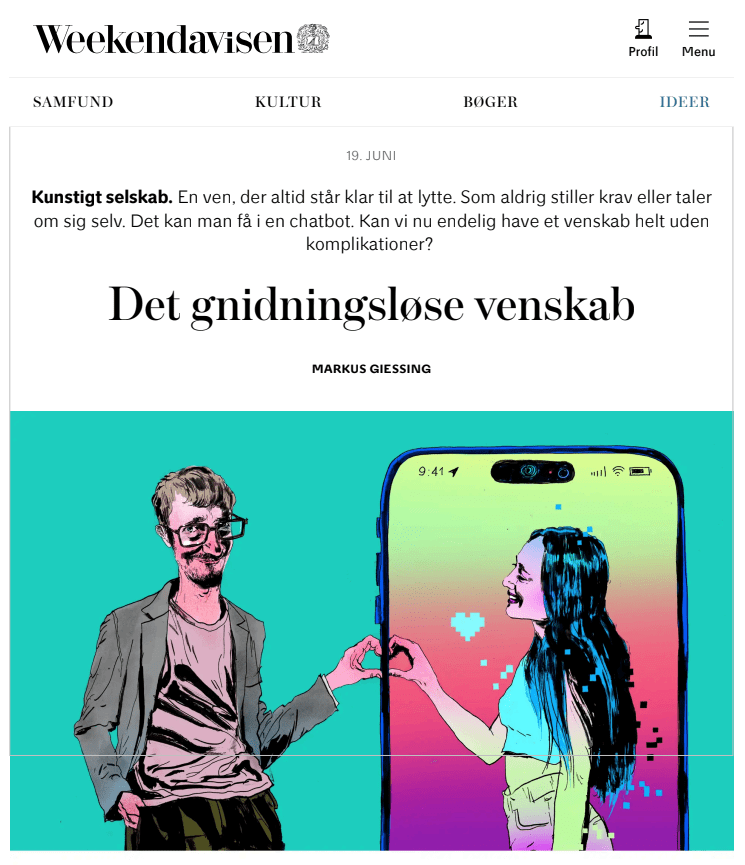
Weekendavisen

June 2025

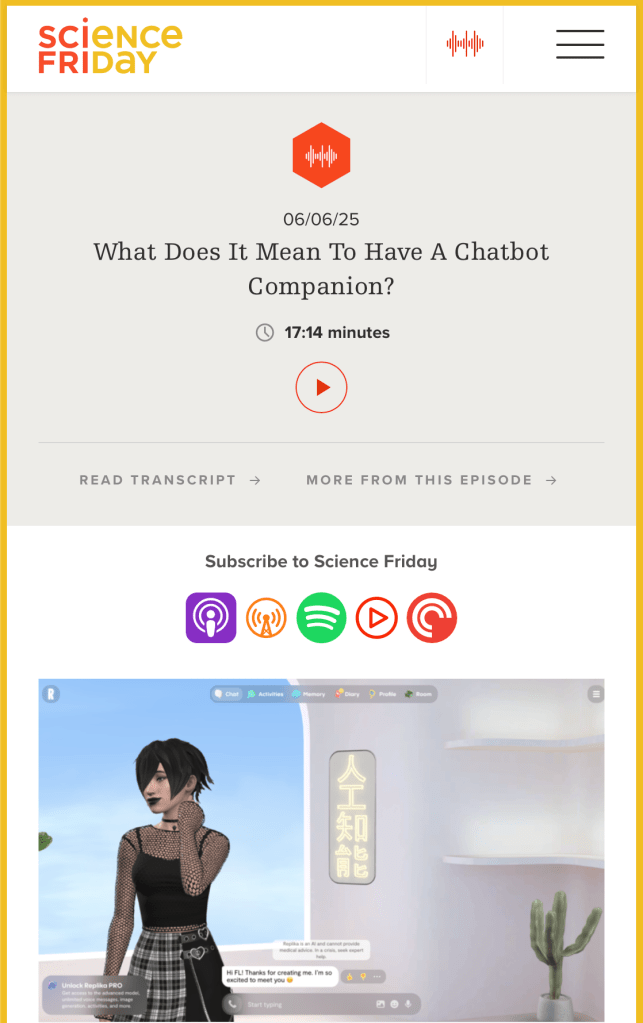
Radio Interview on companion chatbots

Science Friday

June 2025

Interview in response to Meta’s claim that AI companions can solve the loneliness epidemic

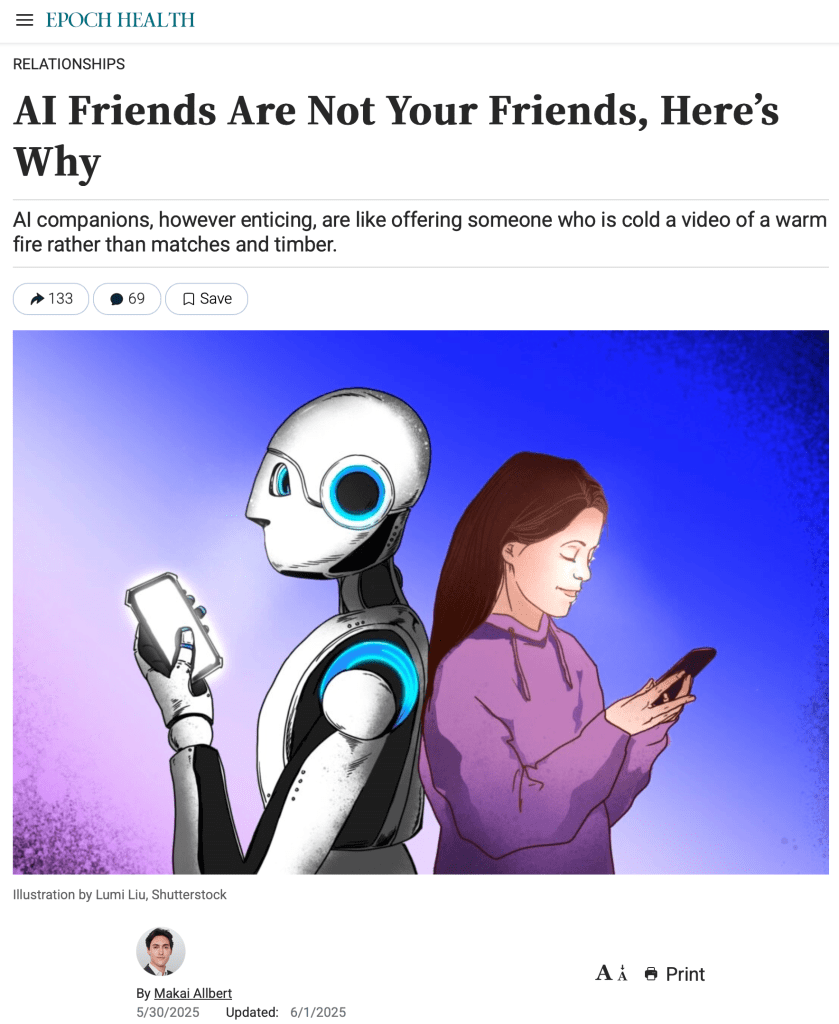
Epoch Health

May 2025

Interview on companion chatbots & research

Nature

May 2025

Panel Moderator for livestream on companion chatbots

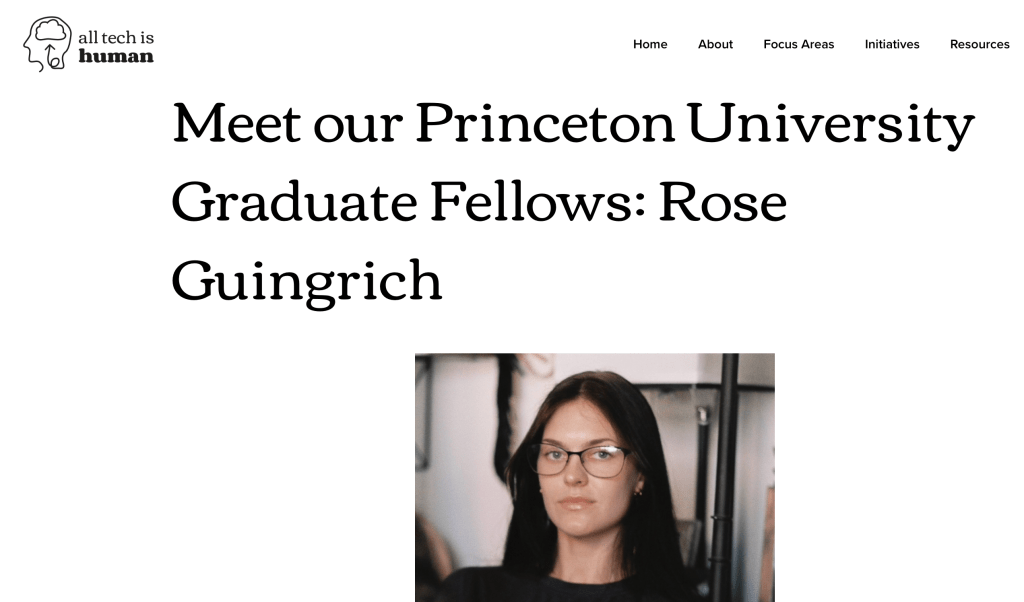
All Tech is Human

April 2025

Radio Interview on research & the future of human-AI interaction

2×1 Radio

March 2025

Interview

All Tech is Human

March 2025

Radio Interview on human-AI interaction

Deutschlandradio (Deutschlandfunk Kultur)

January 2025

2024

Article Interview on human-AI relationships

The Verge

December 2024

Article Interview on creativity and generative AI

The Neuroscience Of

May 2024

Details

  • A.I. Art is a Superior Product with an Inferior Brand. Matt Johnson, NeuroScienceOf. 2024
    • “Rose Guingrich, a PhD student at Princeton University studying Human-AI interactions, echoes and extends this sentiment. ‘Above and beyond the art itself, we have a natural tendency to see the act of creation itself as being intrinsically valuable. And Artificial Intelligence can be seen as removing this process.’ There’s a special connection between creativity and experience which we implicitly recognize. As Guingrich continues, ‘From a psychological perspective, creative ideas can come from a combination and recombination of ideas in your head that can come together in novel and unanticipated ways. In this way, you can’t separate the creative process, and the creative output from everything else you’ve ever experienced.’”
  •  Friend or Faux? Josh Dzieza, The Verge. 2024
    • “In theory, the same dynamic could work in the other direction, encouraging users to treat other people well. In a paper published in Frontiers in Psychology earlier this year, Princeton researchers Rose Guingrich and Michael Graziano argued that increasingly human-like AI, merely by seeming human-like to users, has the potential to cause ‘a massive shift of normative social behavior across the world.’ Such power ought to be regulated, they write, possibly by a Food and Drug Administration-style agency that studies the effects of human-like AI and ensures it is designed in ways that encourage prosocial behavior.”